
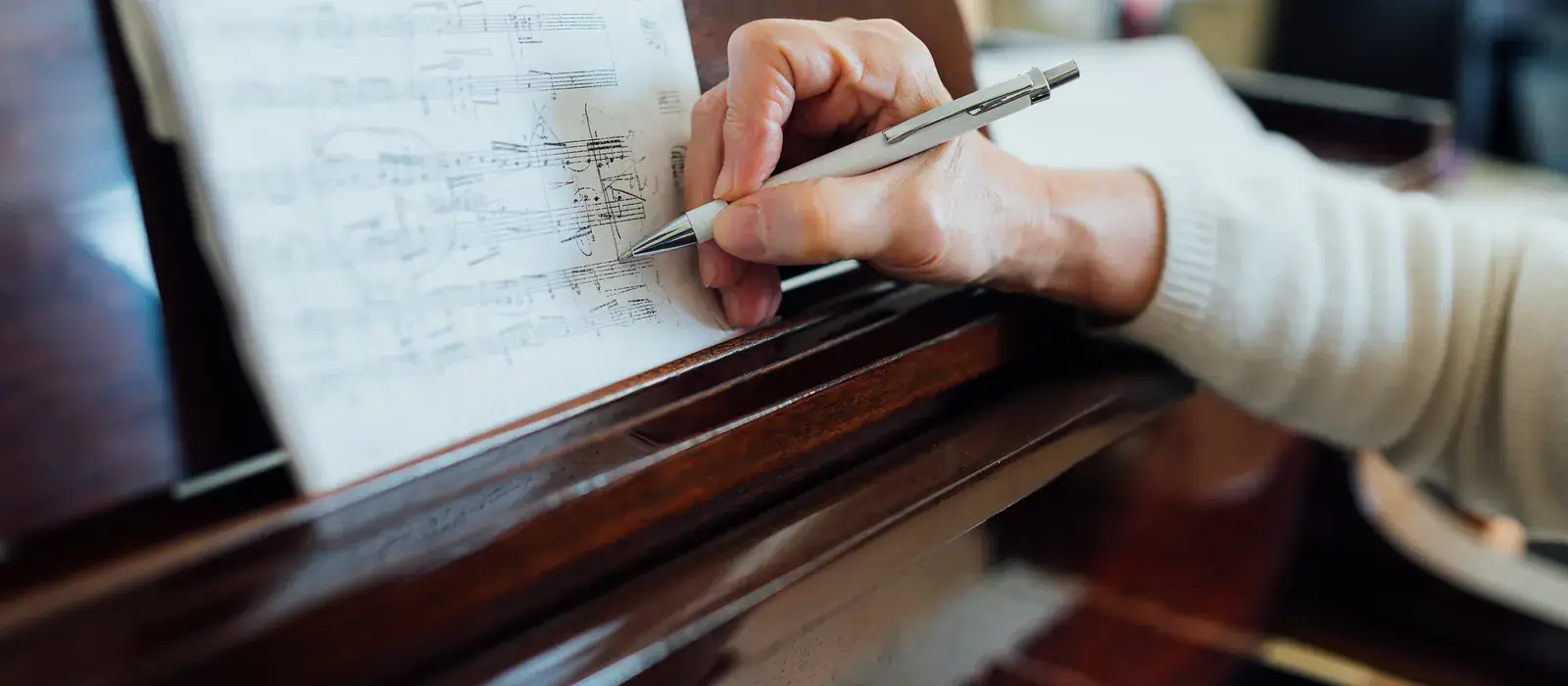
What we learned teaching through exam season 2025
Forty-three of our students sat ABRSM grade exams across the November 2025 and March 2026 sittings. Here's what worked, what didn't, and the three small changes we're making to our exam preparation routine for the next cohort.
 Concerto Team
- # abrsm
- # exams
- # reflections
- # learning-tips
Forty-three of our students sat ABRSM grade exams across the November 2025 and March 2026 sittings — across instruments from Grade 1 piano up to Grade 7 violin, plus a handful of theory papers. The results came back, the certificates have been collected, and we've spent the past few weeks doing what we always do after a sitting: reviewing what worked and what didn't, and adjusting how we prepare the next cohort.
Pass rates and one honest acknowledgement
Of the 43 students entered, 41 passed — three with distinction, 16 with merit, the remaining 22 at pass level. Two did not pass, and we want to address that directly. Both were Grade 5 entries for students we had recommended entering this sitting. In one case, the student had a difficult week leading into the exam — a family illness, missed practice, and the kind of compounding factors that made the entry the wrong call in hindsight. In the other, we misjudged the student's readiness. Both have been re-entered for the November 2026 sitting and we expect strong results.
We share this because exam preparation discussions in music schools tend to default to celebrating distinctions and quietly hiding fails. Both are part of the work, and the schools that improve fastest are the ones that look honestly at the second category.
What worked — three patterns
Across the 41 who passed, three things showed up reliably in the students who scored well:
Eight-week countdown structure. Students whose lessons explicitly shifted into "exam preparation mode" eight weeks before their sitting scored measurably higher than students whose preparation was less structured. The eight-week structure means: weeks 1-4 working on the technical elements (scales, sight-reading, aural) alongside the pieces, weeks 5-6 polishing and consolidating, weeks 7-8 running full mock exams in the actual exam room. It's not a secret, but it is a discipline.
Recital practice. Students who performed their exam pieces in front of an audience — even just three or four people, even just family — at least twice before the sitting walked in calmer and played better. Practising at home and practising in front of people are different skills. Sight-reading nerves and slip-ups are usually a performance-practice deficit, not a music-knowledge one.
Theory done early. The Grade 6 and above students who had their theory sorted well before the practical sitting were noticeably less stressed. Students still racing to complete Grade 5 theory in the same quarter as their Grade 6 practical were carrying a cognitive load that showed up in their playing.
What didn't work — two patterns
And honestly:
Late-stage repertoire changes. We changed exam pieces for three students inside the last 12 weeks before their sitting — twice because the student wasn't progressing on the original piece, once because the syllabus update came in late. All three passed, but two of those three scored lower than we'd hoped. Lesson learned: piece changes inside the final 12-week window are nearly always a bad idea. Better to enter the original piece slightly underdone than introduce a new one and not have time to settle it.
Cramming sight-reading. Sight-reading is the section of the exam where preparation has the smallest short-term return. Students who tried to "improve their sight-reading" in the final month before the exam saw almost no benefit. Sight-reading is a long, slow skill — best built across years, not weeks. We're moving toward earlier and more consistent sight-reading work for our pre-Grade 5 students for exactly this reason.
Three changes we're making
From the post-mortem, three concrete adjustments for the next cohort:
- Mock exam day. Two weeks before each sitting, we'll run a full mock exam day at the studio — students play their pieces, scales, sight-reading and aural for a Concerto trainer who isn't their usual teacher, in the exam room, with a stopwatch. The mock-day data will go to the regular trainer to inform the final two weeks of preparation. This was previously informal; we're making it formal.
- Mandatory recital month. Every exam-bound student will perform their pieces for an audience — Concerto recital evening, family gathering, or school assembly — at least twice in the eight weeks before their sitting. We'll help organise the opportunities. Performance under pressure is a teachable skill.
- Earlier sight-reading from Grade 1. Sight-reading will move from "we do this when we have time at the end of the lesson" to "we do this for the first five minutes of every lesson" from Grade 1 onward. Cumulative effect over years matters more than intensive effort in months.
For families whose children are entering next sitting
The November 2026 sitting is approaching, and entries will close in early September. If your child is being considered for entry, we'll be in touch directly to discuss readiness. If you're new to us and curious about the ABRSM pathway — start there, or book a discovery session to discuss your child's specific situation. We're happy to be honest about where any student sits on the ladder and what the realistic next twelve months look like.
Share this piece
WhatsAppContinue reading
More from Learning Tips.
Learning Tips
Why 30 minutes a day beats 3 hours on Saturday
Every term we have the same conversation with at least one family: the child practises three hours on Saturday and twenty minutes the rest of the week. Here's why we always recommend the opposite, and the small change that usually fixes it.
Concerto Team · 4 min read
Guides
How to choose your child's first instrument — a Kenyan parent's guide
Piano, keyboard, guitar, violin or voice — the first instrument shapes years of practice habits. Here's how Kenyan parents we work with actually decide, and what we wish more of them knew before they bought anything.
Concerto Team · 9 min read
Guides
Ready for your ABRSM exam? How we check before you pay to sit it
ABRSM entry fees aren't small, and they climb with every grade. So before any Concerto student books an exam, we run an honest readiness check — a full mock under real conditions. If you're not ready, we say so. Here's exactly how we decide.
Concerto Team · 5 min read
Ready to try a lesson?
Free discovery session at our Kikuyu studio, in-home across Nairobi, or live online. We'll be honest about whether we're the right fit.