01
Studio.
Come to our Kikuyu studio. Private or small-group sessions, in the room with your trainer and a proper instrument.
KES 1,600/ session
Book a studio classGuitar lessons
Acoustic, electric, classical or bass — pick your axe and we will build a programme around the music you actually want to play. ABRSM and Trinity Rock & Pop grades available, taught at our Kikuyu studio, in your Nairobi home, or live online.
Accreditation
ABRSM & Trinity Rock & Pop
Grade range
Initial – Grade 8
Styles
Acoustic · Electric · Classical · Bass
First lesson
Free discovery session
The journey
Beginner to Grade 8 (ABRSM / Trinity). Each milestone below is roughly a year of consistent practice; ABRSM certification is recognised worldwide and counts toward UCAS points for university applications.
01
Foundation (Pre-Grade 1).
Posture, holding the pick, the first six chords (E, A, D, G, C, Em, Am), single-string melody work, and how to tune. By the end you can strum your first song straight through.
Outcome:Ready to sit Trinity Initial or ABRSM Grade 1.
02
Grade 1 – 2.
Barre chords (the painful but essential gateway), eighth-note strumming patterns, simple riffs and licks, the first power chords for electric students, and three exam pieces.
Outcome:Grade 2 standard — confident with a campfire repertoire of 20+ songs.
03
Grade 3 – 4.
The pentatonic and minor scales (the lead-guitar foundation), syncopation, fingerstyle technique for acoustic and classical players, simple solos transcribed from your favourite tracks.
Outcome:Grade 4 — soloing capability with intentional phrasing.
04
Grade 5 – 6.
Modes and modal soloing, advanced rhythm techniques (palm muting, chunking, hybrid picking), reading standard notation, jazz chord voicings, the CAGED system across the entire neck.
Outcome:Theory Grade 5 passed — unlocks higher practical grades.
05
Grade 7 – 8.
Advanced repertoire (Villa-Lobos for classical, Hendrix for electric, Tommy Emmanuel for fingerstyle), performance practice, recording and signal-chain literacy, recital preparation.
Outcome:Grade 8 — recognised diploma-entry credential worldwide.
06
Diploma & beyond.
ARSM, DipLCM, advanced jazz studies and contemporary performance prep. For those targeting professional gigs, sessions, teaching or undergraduate music study.
Outcome:Diploma certification — eligible to teach guitar professionally.
How you can learn
01
Come to our Kikuyu studio. Private or small-group sessions, in the room with your trainer and a proper instrument.
KES 1,600/ session
Book a studio class02
Trainer comes to you — Muthaiga, Kileleshwa, Kilimani, Upperhill, Milimani. Same faculty, your space, no commute.
Premium · pricing on enquiry
How in-home works03
Live one-on-one over our private classroom. Anywhere with a stable connection — Kenya or abroad.
KES 2,000/ session
Try onlineInside the room
Every session has a rhythm. Here's the shape of a typical hour — adjusted up or down depending on age, grade and what your last week looked like.
00:00 – 00:05
Warm-up.
Chromatic finger exercise across all six strings, both hands. Tune to standard or to whichever tuning the current song needs.
00:05 – 00:15
Technique focus.
Pentatonic scale across two octaves, three-notes-per-string. We pick one box position and drill it until it is automatic.
00:15 – 00:35
Repertoire.
A song you brought — rhythm part first, solo second, broken into 4-bar chunks. We learn it slowly and only push tempo once it is clean.
00:35 – 00:50
Improvisation.
Backing track in the key of the day. You solo over it; we discuss what worked, what to try next, and add one new lick to your vocabulary.
00:50 – 01:00
Practice plan.
Daily targets written in the student journal: technique drill, repertoire bars, improvisation goal. Parents of younger students get a copy by email.
The faculty
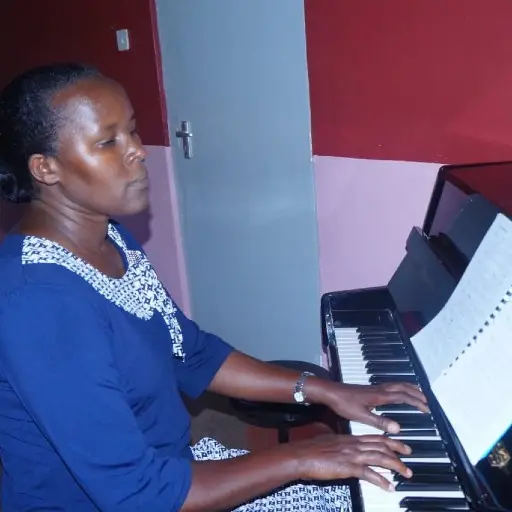
Trainer
piano · vocals · flute · saxophone · recorder · theory · wind · guitar · violin
Available today
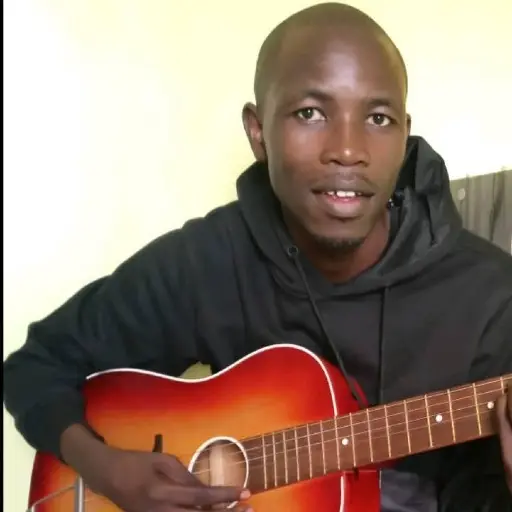
Trainer
guitar · piano · vocals
Available today

Trainer
piano · recorder · theory · guitar
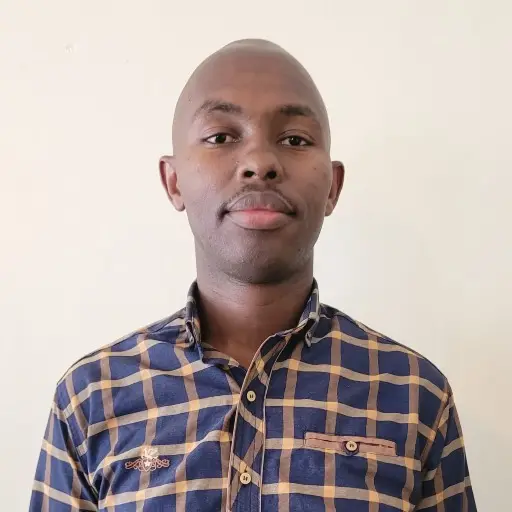
Trainer
piano · guitar
Frequently asked
For kids under 10 we recommend a 3/4-size classical or steel-string acoustic — easier on small fingers and no amp dependency. For teens and adults, start with whichever you love listening to; the fundamentals are 80% the same and switching later is painless.
A Yamaha F310 (acoustic), a Squier Bullet Strat (electric), or a Cordoba C1 (classical) — all in the KES 12,000–25,000 range, all reliable. Avoid the very cheapest options; the action is usually unplayable and you will quit out of frustration, not lack of talent. We can advise on what to look for.
Most students play their first full song (three or four chords, a simple strum pattern) within four to six weeks. Reaching the "play anything off Spotify" level usually takes two years of consistent practice.
Yes — bass is taught as a sibling track under the same guitar pillar. Bass students follow Trinity Rock & Pop bass grades, focus on groove and band integration, and frequently play in our student ensembles.
Of course. We have left-handed guitars in the studio for trial lessons. Most of our students who buy their own instrument do choose left-handed, but a few find right-handed easier — your trainer will help you decide in the first month.
Yes. We use a dual-camera setup over a low-latency classroom — your trainer sees your fretting hand and your face. We will recommend a USB audio interface (around KES 6,000) for clean tone if you want to play electric guitar over the call.
Beginners: 15 minutes a day, six days a week. Grade 3 and up: 30–45 minutes a day. Consistency beats intensity — three hours one Saturday will not move you as fast as 20 minutes every weekday.
Yes — our intermediate and advanced guitar students rotate through small ensembles (jazz combo, acoustic duo, electric three-piece) that meet monthly and perform at our end-of-term recital.
Book your first lesson — your trainer will meet you wherever you are, with a plan tailored to your goals.