
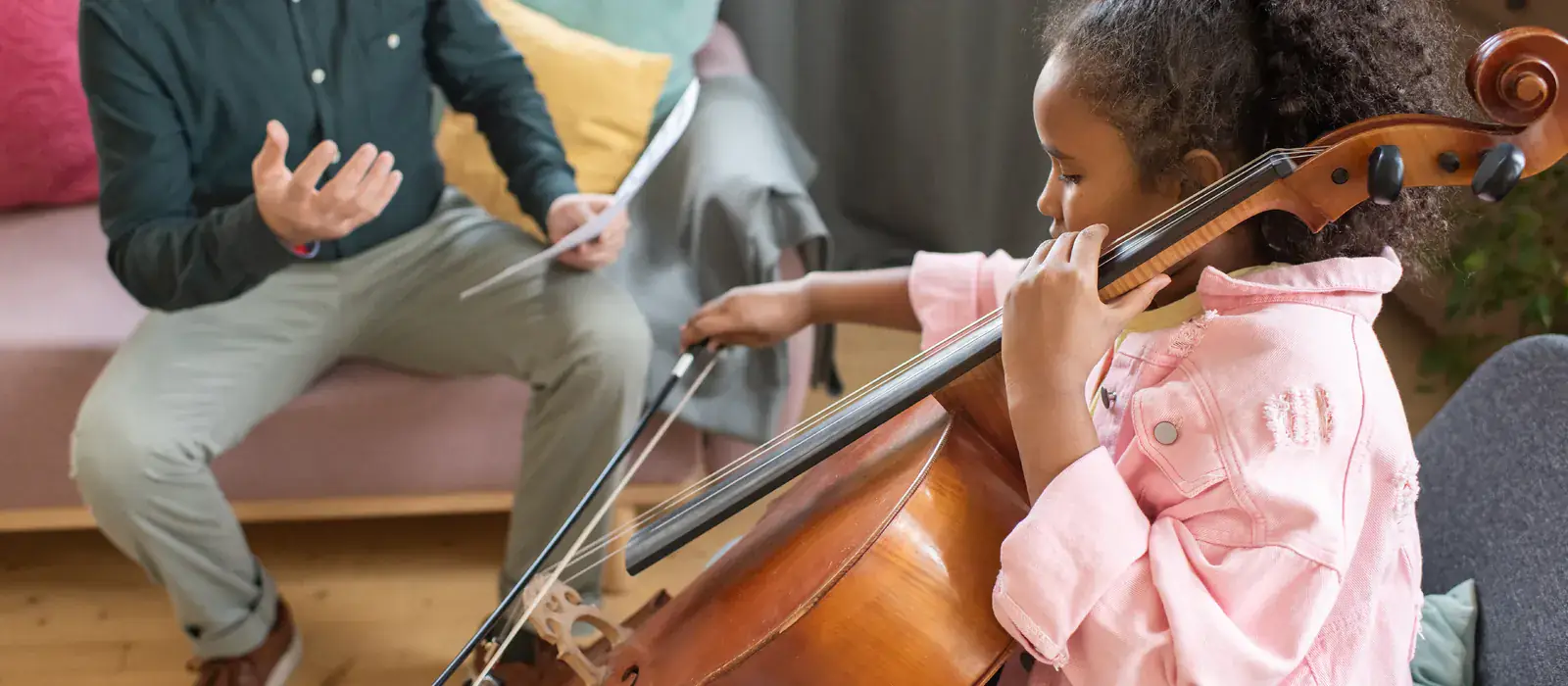
Meet Sarah — our strings department lead
Sarah has been with Concerto since 2019 and runs our strings programme — violin, viola, cello and the small but determined ensemble that practises in the church annex on Thursday afternoons. We sat down with her to talk teaching, performance, and what she wishes more parents understood.
 Concerto Team
- # trainer-spotlights
- # strings
- # violin
- # cello
Sarah joined us in 2019. She had been teaching in Nairobi for six years already, had a small private studio of her own, and was looking for a school structure that would let her build a strings programme rather than just deliver one. Seven years on, the programme she runs at Concerto includes violin, viola, cello, and the modest but tightly-held string ensemble that practises in our church annex every Thursday afternoon. We sat down with her recently. What follows is the conversation, lightly edited.
On choosing the violin
How did you start on strings?
"My grandmother had an old violin in her house in Nyeri. It wasn't a particularly good violin, but I was eight and I thought it was magical. My mother said if I could find someone to teach me, she'd pay for the lessons. Took me six months to find a teacher — there weren't many in Nyeri in the late 1990s — but I did. And I've been on the instrument ever since."
"What I've noticed teaching here is that almost none of my students start because of an instrument they inherited. They start because they heard one. A school concert, a recording, occasionally a film score. The entry point is the sound itself, not the object. That's a real shift from my own generation."
On what parents misunderstand about strings
What do you wish more parents understood before their child started?
"That the first six months will sound rough. There's no kind way to describe it. A violin in untrained hands makes a noise that is genuinely difficult to live with in a household, and parents who weren't warned about this often quietly conclude their child has no talent. They don't. Every violinist sounds like that for six months. The ones who progress are the ones whose families understood it was coming."
"The second thing — and this is harder — is that strings reward consistency more than any other instrument family. Piano forgives a missed week. Drums forgive a missed week. Strings remember. A student who misses 10 days has lost real technical ground, because the muscle memory in the left hand and the bow arm is shallower than it looks. So when I tell parents 25 minutes a day every day, I really mean every day."
On the strings ensemble
The Thursday ensemble — tell us about it.
"We started it in early 2022. I'd been teaching students one-on-one for two years and felt strongly that the next layer they needed was each other. There were six students at the first session. We're now around twelve, ages 9 to 16, and we play together every week for an hour. Sometimes it's lovely. Sometimes it's a mess. Both are educational."
"What I underestimated was how much the ensemble would do for the one-on-one lessons. Students who play in the ensemble bring something back to their private lessons that they didn't have before — they're listening differently, they're aware of where they sit in a texture, they're better at giving and taking time. It's the single most useful thing I've added to the strings programme since I joined."
On the trainer she wishes she'd had
If you could send a message back to your eight-year-old self about how to learn the violin, what would you say?
"Practise slower. Always slower than feels comfortable. I spent ten years pushing through pieces at tempos I hadn't earned, building bad habits that took another five years to unlearn. The students I teach now who really progress are the ones who can sit with a difficult passage at quarter speed for ten minutes. I couldn't do that at their age. I want to give them the chance to."
"Also — and this is a small thing — I'd tell her to look after her hands. Cold mornings, no warm-up, you can hurt yourself. The instrument is unforgiving in ways that look minor and aren't."
On a typical Concerto lesson
"It starts with the bow. Every lesson, I look at the bow grip first. If the bow grip has slipped, everything else for the next 40 minutes will be working against gravity. Then a scale, slowly. Then we go into the pieces — current term piece, exam piece if there's one, a fun piece they've asked to learn. We finish with sight-reading. I try to send students home with one thing to work on, not five. The five-things-at-once lesson is a lesson the student forgets within an hour."
How to study with Sarah
Sarah teaches violin, viola and cello at our Kikuyu studio. She has a small in-home roster across Karen, Lavington, and Kileleshwa, and she takes online students for grades 3 and above. She does not currently teach beginners under the age of seven. Her current waitlist is short.
If you'd like to study with her, the easiest route is to book a discovery session and request her by name. Or browse our full faculty if you're not sure yet whether strings are the right fit — we'll talk it through honestly.
Share this piece
WhatsAppContinue reading
More from Trainer Spotlights.
Guides
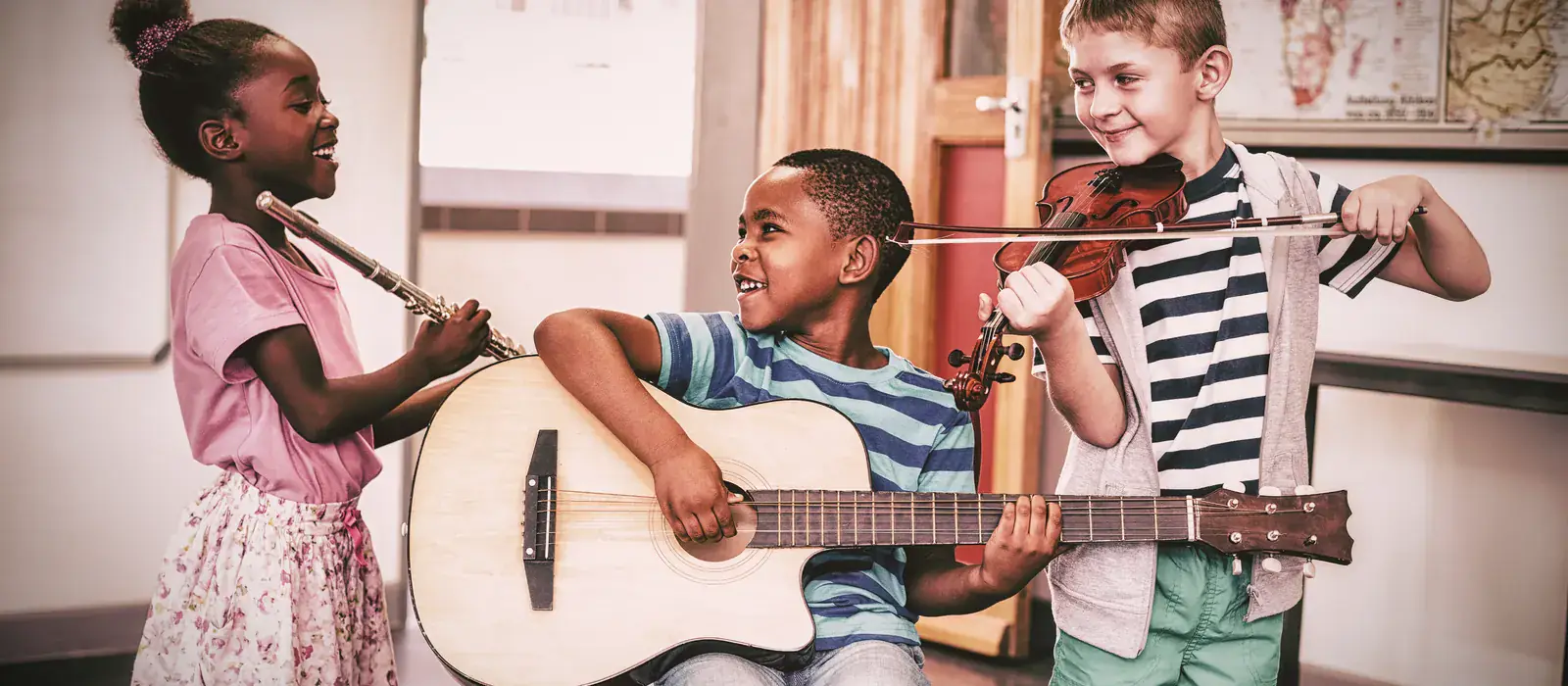
How to choose your child's first instrument — a Kenyan parent's guide
Piano, keyboard, guitar, violin or voice — the first instrument shapes years of practice habits. Here's how Kenyan parents we work with actually decide, and what we wish more of them knew before they bought anything.
Concerto Team · 9 min read
Guides
Ready for your ABRSM exam? How we check before you pay to sit it
ABRSM entry fees aren't small, and they climb with every grade. So before any Concerto student books an exam, we run an honest readiness check — a full mock under real conditions. If you're not ready, we say so. Here's exactly how we decide.
Concerto Team · 5 min read

Studio Notes
Why we picked ACK Immanuel Church, Kikuyu, as our home
We had three viable locations on the table in 2016 — two in Nairobi proper, one in Kikuyu. Here's why the choice that looked unconventional at the time has aged into the most obviously right decision the school has made.
Concerto Team · 4 min read
Ready to try a lesson?
Free discovery session at our Kikuyu studio, in-home across Nairobi, or live online. We'll be honest about whether we're the right fit.